

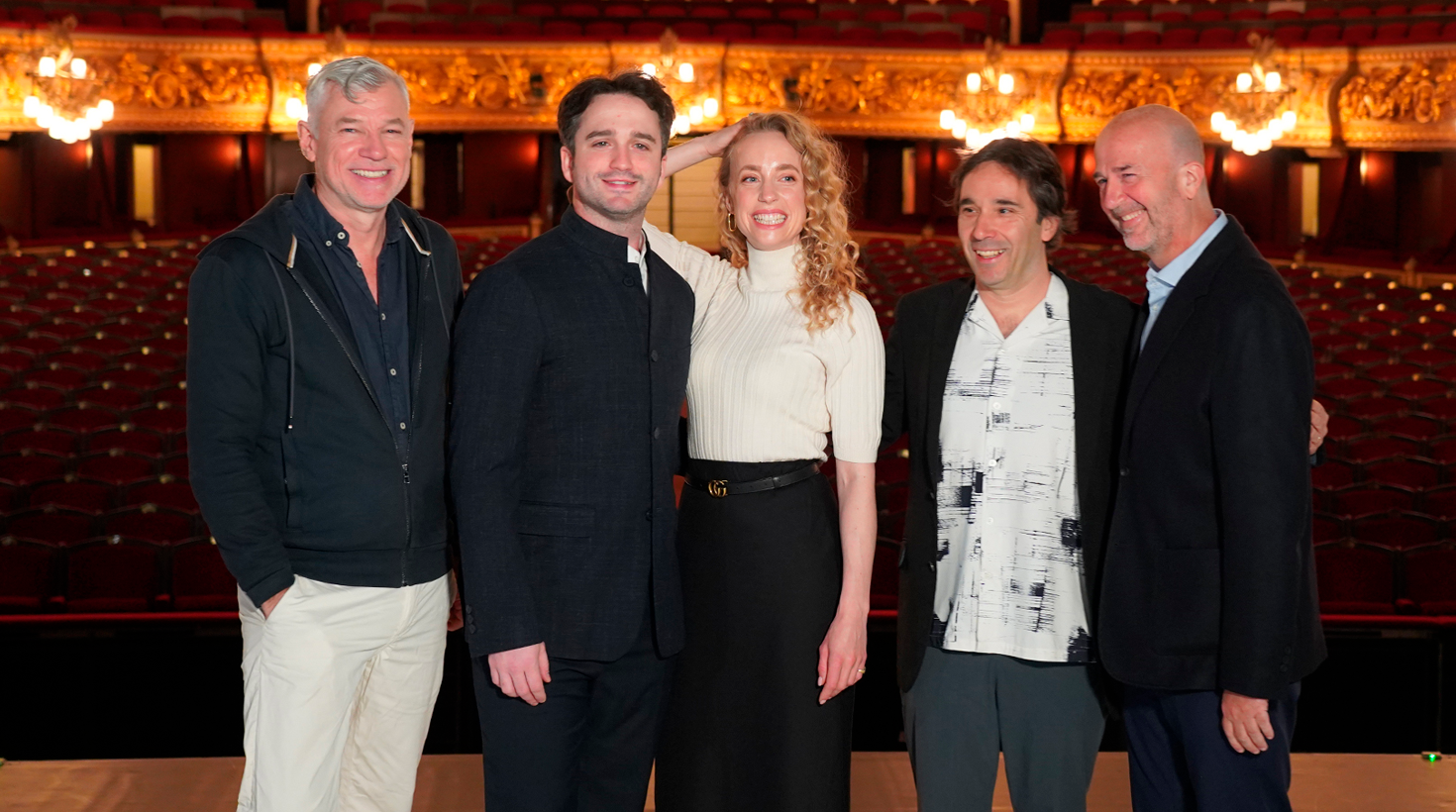
The Basque tenor Xabier Anduaga debuts at Liceu with Werther by Massenet in a production by Christof Loy set in the 1950s. He shares the role with Matthew Polenzani and the Charlottes of Kristina Stanek and Elmina Hasan. Henrik Nánási conducts 10 performances from 4 to 17 May, with an Under35 session on the 2.


The Gran Teatre del Liceu presents Werther, by Jules Massenet, in a production signed by Christof Loy and with maestro Henrik Nánási on the podium, from 4 to 17 May, with a preview performance for the Under35 collective, on 2 May.
The Basque tenor Xabier Anduaga debuts the role of Werther in Barcelona, in a major milestone of his career, accompanied by the mezzo-soprano Kristina Stanek in the role of Charlotte. The second cast will be led by Matthew Polenzani as Werther and Elmina Hasan as Charlotte.
Over time, Werther has been the subject of numerous reinterpretations in different artistic languages, from literature to cinema. In the operatic field, various adaptations already appeared at the end of the 18th century, but it is that of Jules Massenet which has endured most strongly: a profoundly human reading, of great musical sensitivity and a lyricism that is expressed both in the grand moments and in the most intimate details.
Considered one of the most complete and memorable operas by Massenet, this work represents the peak of his artistic maturity, both for the richness and subtlety of the orchestration and for the dramatic balance that structures the whole.
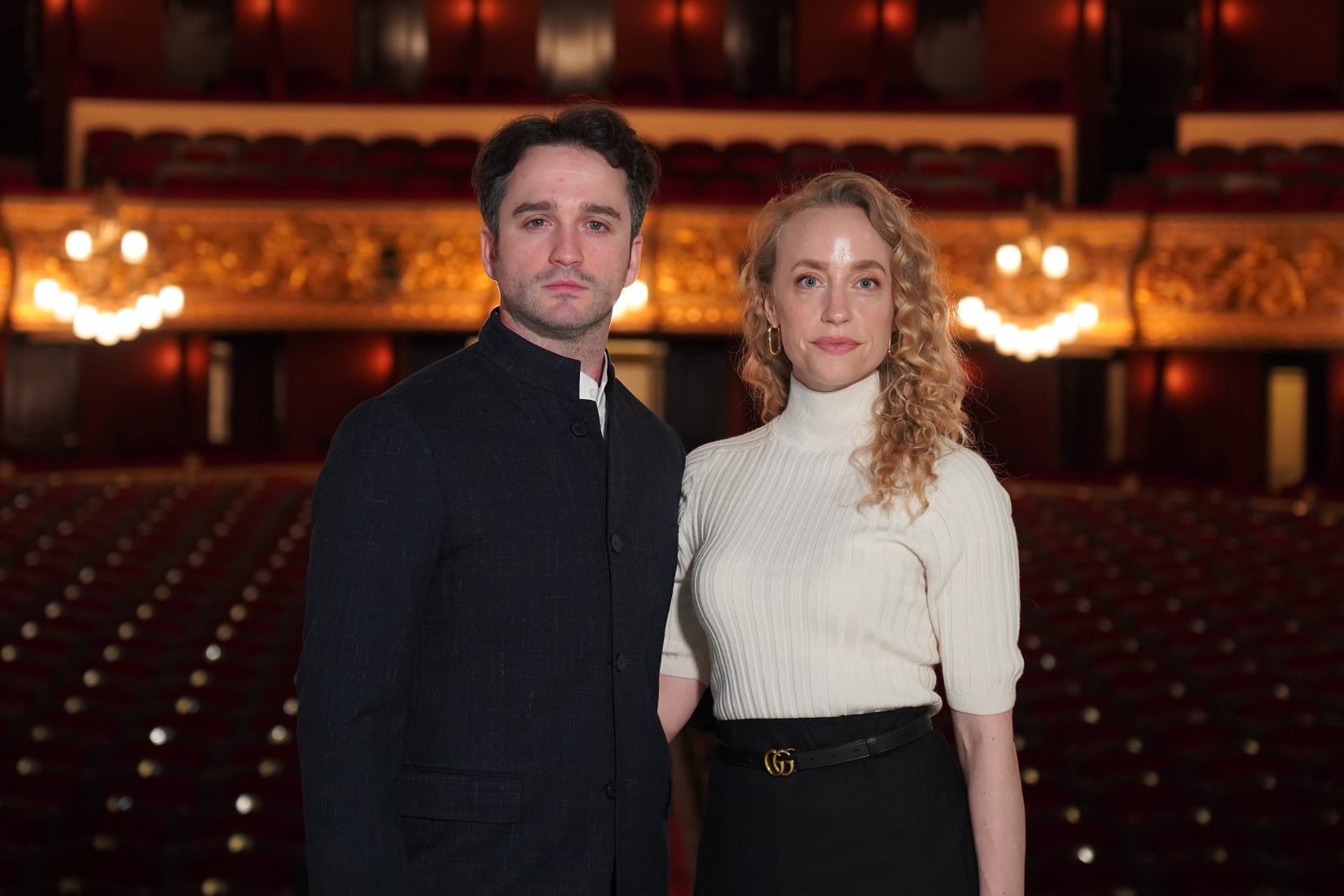
The production
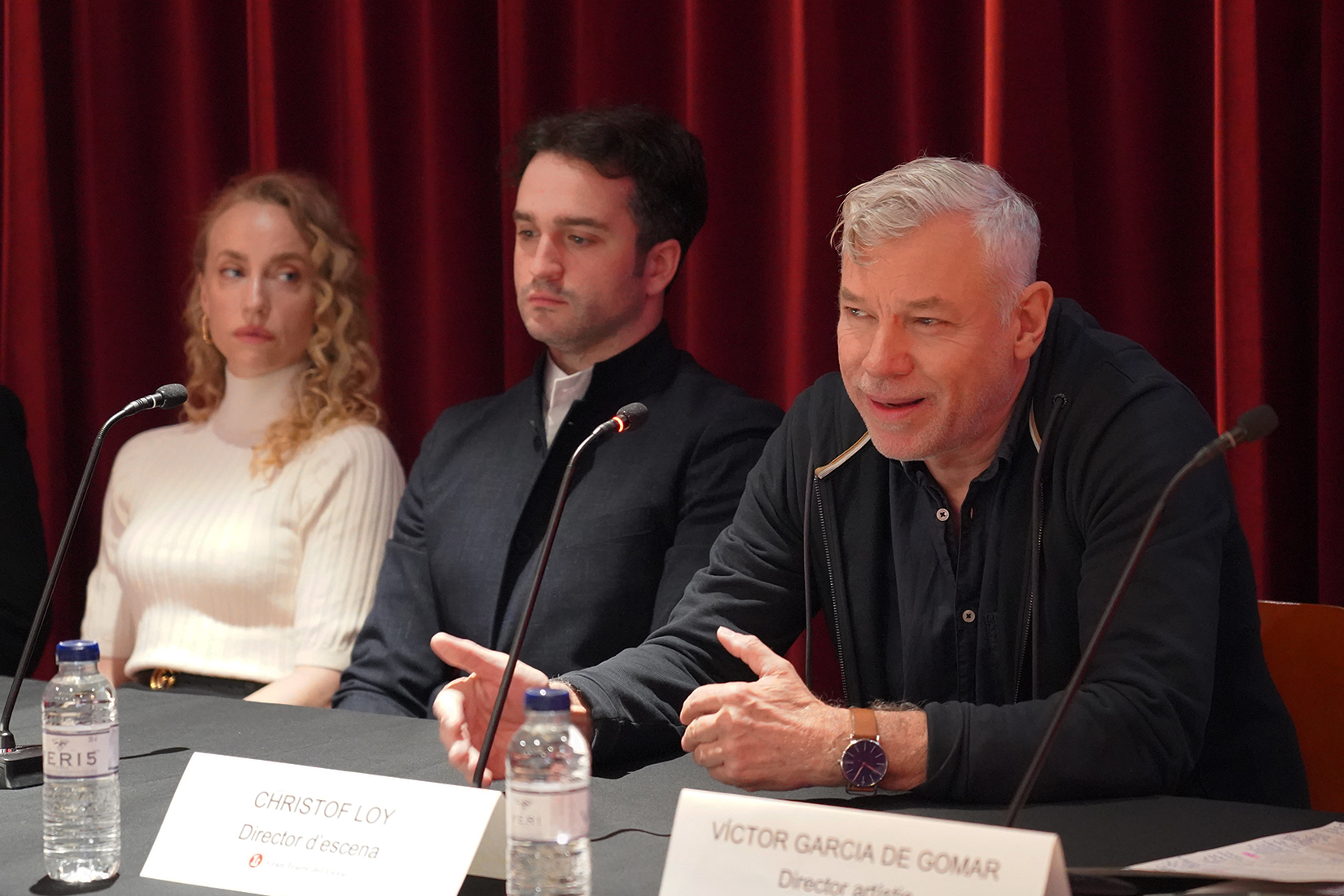
The German Christof Loy signs the stage direction with an austere concept: a single space for the four acts which, far from limiting the action, allows a deeper exploration of the characters’ psychology.
A regular director at the Liceu in recent seasons (Rusalka (24/25), Eugene Onegin (23/24), Don Giovanni (20/21), Macbeth (16/17), Arabella (14/15), Il turco in Italia (12/13), Die Entführung aus dem Serail (09/10)), Christof Loy stands out for his desire to go beyond the surface of the stories. His productions, always of great formal beauty and stage precision, explore underlying conflicts and characters as complex beings.
This new production, coming from La Scala in Milan, focuses on interpersonal mechanisms and the psychological aspects of the characters. The action takes place in a single space divided into two levels that evokes Charlotte’s house, the square of Wetzlar, or Werther’s house.
The costume design by Robby Duiveman maintains the link with Goethe, who describes Werther wearing a yellow waistcoat. The lighting by Roland Edrich subtly modulates the atmosphere and dramatic tension of each scene.
A cast of the highest quality
The role of Werther is one of the most demanding in the lyric tenor repertoire, and the Liceu has two top-level performers. The Basque tenor Xabier Anduaga will debut the role of Werther in Barcelona, a challenge that marks a turning point in his career. He will share the role with the American tenor Matthew Polenzani, one of the most talented and distinguished tenors of his generation, a regular at the Metropolitan Opera in New York and at the most prestigious European theatres.
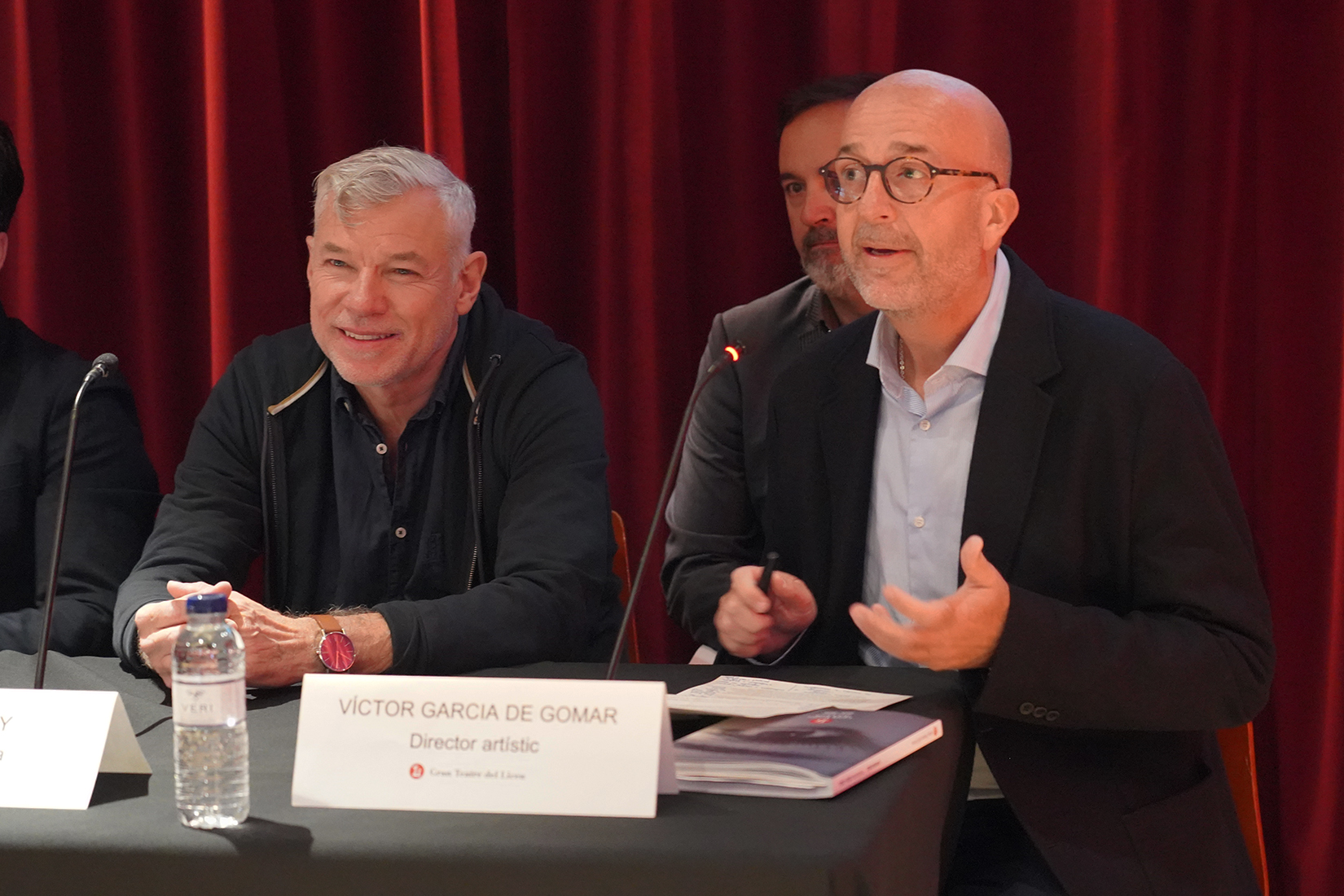
Alongside Anduaga, the character of Charlotte, written for mezzo-soprano and which plays a very prominent role in the opera, will be performed by the fantastic Kristina Stanek, a regular on leading European stages. With this role, Stanek debuts at the Gran Teatre del Liceu and also in the role of Charlotte.
The cast is completed by the mezzo-soprano Elmina Hasan also as Charlotte. The two Spanish sopranos Sofía Esparza and Leonor Bonilla, with distinguished European careers, will sing Sophie. Albert, Charlotte’s fiancé, will be performed by the baritones David Oller and Carlos Daza. The Barcelona-born bass Stefano Palatchi will take on the role of the mayor, which he already performed in the last production of Werther at the theatre. The baritone Enric Martínez-Castignani takes on the role of Johann, which he sang in this same production at Teatro alla Scala, and the tenor Josep Fadó will perform Schmidt. Musical direction will be under the baton of maestro Henrik Nánási.
Beyond especially notable moments, such as Werther’s arias or Charlotte’s major scene in the third act, the strength of the work lies in its overall conception. With a highly coherent structure, the drama asserts itself as a whole and builds a profoundly human portrait of the protagonist: a character trapped between desire and impossibility, unable to reconcile his emotions with reality. It is this tension that makes Werther a work of emotional intensity that continues to resonate with audiences.
Portrait of a passionate young man
The work tells the story of an impossible love between the idealistic Werther and the responsible Charlotte, a relationship marked by impossibility and tragically leading to the protagonist’s suicide.
Massenet approached this adaptation more than a century after the publication of Goethe’s novel. The genesis of the opera dates back to 1886, when, after the success of Manon, the composer attended the Bayreuth Festival with his publisher Georges Hartmann, who gave him a French translation of Werther. The impact of Wagner’s music and the Romantic atmosphere of that experience led him to conceive an operatic version, which would eventually premiere in Vienna in 1892. The result is a work of intense lyricism, with a denser and more dramatic orchestral writing than in his earlier works.
Although it is not a literal adaptation (the original novel is epistolary and difficult to bring to the stage), the opera preserves the essential core of the story. Werther, a young man passionate about poetry, arrives in Wetzlar and meets the mayor’s family, where he comes into contact with Charlotte and Sophie. Charlotte, engaged to Albert due to a promise made to her deceased mother, finds herself torn between duty and feeling. Werther’s immediate infatuation triggers an emotional conflict that grows throughout the work, fueled by successive encounters that intensify his despair.
The climax comes in the third act, when Charlotte and Werther meet again for the last time. She returns to him some verses of Ossian that he himself had translated, and Werther, deeply shaken, performs his most emblematic aria, Pourquoi me réveiller?. Unable to overcome his torment, he decides to end his life. In the final scene, Charlotte runs to his side and confesses her love, but it is already too late.
Pau Casals’ Goffriller cello will be heard in Werther at Liceu
The exceptional Goffriller cello that Pau Casals played for more than sixty years will be heard in all performances of Werther at the Gran Teatre del Liceu.
As part of the commemoration of the 150th anniversary of Pau Casals’ birth, the Fundació Pau Casals has temporarily lent this instrument to Òscar Alabau, principal cellist of the Orquestra of the Gran Teatre del Liceu, coinciding with the opera performances. Until a few days ago, the cello was in New York.
Built in 1733 by the Venetian luthier Matteo Goffriller, this unique instrument was acquired by Pau Casals in 1908 and accompanied him throughout his career. Upon his death, the musician bequeathed it to the Fundació Pau Casals with the wish of keeping it “alive”, meaning that it would continue to be played by other performers.
The loan to Òscar Alabau is in line with this wish and also represents recognition of the Liceu orchestra’s principal cellist. The connection carries additional symbolic value, as Pau Casals himself was also principal cello of the theatre.
During this period, Alabau will perform the Goffriller both in Werther performances and in other concerts and recitals.
With the support of:

|