

Lorenzo Da Ponte, Mozart’s librettist in his famous trilogy (Le nozze di Figaro, Don Giovanni, Così fan tutte), lived a life like a novel: traveller, director of the New Italian Theatre of the Viennese court, Italian teacher in London, and friend of Casanova (whom he strongly drew upon for the characterisation of Don Giovanni). He later became a professor at Columbia University in New York, where he died.
Beaumarchais, on the other hand, with an extraordinary personality, shared with Da Ponte a life full of adventures: watchmaker, inventor, playwright, piano teacher to the daughters of Louis XV, spy, diplomat, publisher, horticulturist and revolutionary. Beaumarchais struggled for a long time to publish Figaro o La folle journée, which was censored and obstructed by the king himself due to its harsh social critique of the aristocracy on the eve of the French Revolution. The play depicts the social antagonism between classes —master and servant— and defends the moral superiority of the lower classes, encouraging revolt.
Le nozze di Figaro stands as an extraordinary operatic monument, without comparison. A brilliant score full of unpredictable turns that follows the classical theatrical unities: place, time and action. Mozart turns the closed space into a human laboratory where every gesture, silence and glance acquires essential dramatic meaning.
The audience is invited to immerse themselves in this gallery of characters: the Countess’s solitude, an emancipated and clever Susanna, an apparently obedient yet conspiratorial Figaro, and an impulsive and innocent Cherubino. This constellation reveals a shared female suffering, the origin and consequence of a male violence that is often normalised. The only refuge for women is solidarity among themselves.
This microcosm can be read as a symbolic confrontation between two worlds: the masculine (individualistic and possessive) and the feminine (intelligent, sensitive and generous). The opera encompasses all forms of love: from adolescent idealism to relationships, family bonds and desire. Mozart builds an emotional map of the human being with a psychological precision that still resonates today.
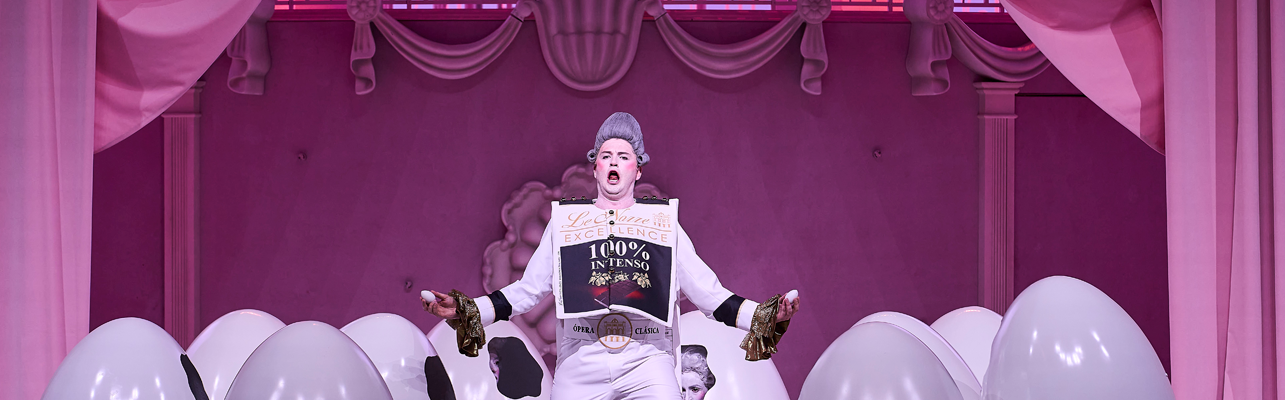
The urgency of reviving Le nozze di Figaro today comes from its ability to challenge contemporary power structures. Beneath the comedy of intrigues, the opera exposes hierarchies, male privilege and symbolic violence. The new vision by stage director Marta Pazos raises questions about desire, identity and power.
In times of polarisation, this opera remains a space where art does not comfort: it disturbs, questions and compels us to think.
Víctor Garcia de Gomar
Artistic Director of the Gran Teatre del Liceu


