

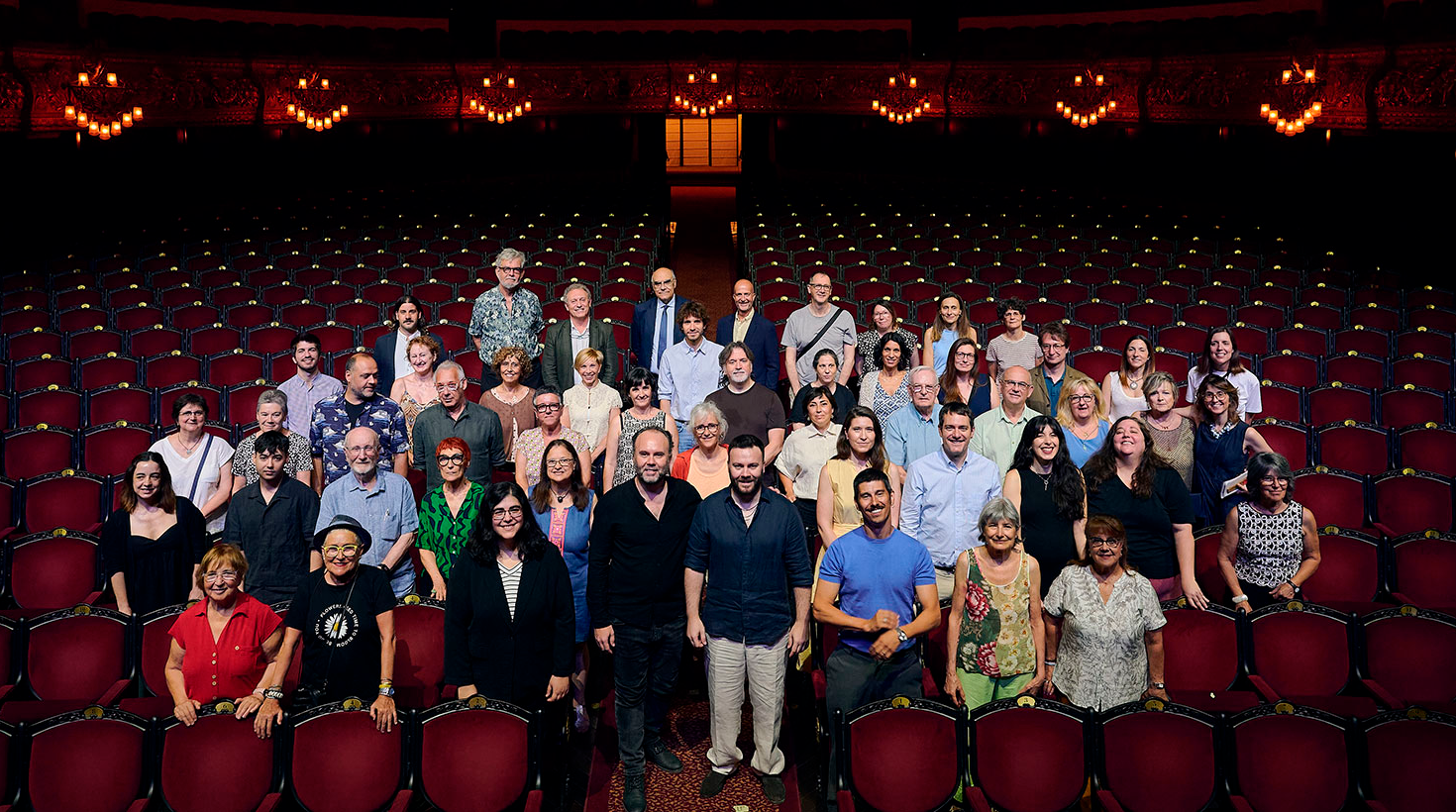
The Gran Teatre del Liceu presents 'La rosa dels set pètals', the second community-creation opera of OPERA PRIMA. Co-created with the social and cultural fabric of Sant Andreu, the production will culminate in three performances in June 2027 and reinforces the Liceu’s commitment to participation and cultural inclusion.


The Gran Teatre del Liceu presents La rosa dels set pètals, the second community-creation opera of the OPERA PRIMA project, co-created with the social and cultural fabric of the Sant Andreu district and scheduled to premiere from 4 to 6 June 2027. Following the success of La gata perduda, the first community opera promoted by the Liceu in the Raval neighbourhood, OPERA PRIMA is consolidated as a tool for inclusion, participation and social transformation through culture.
The second edition of OPERA PRIMA is developed from, with and for the Sant Andreu district, with the support of the Barcelona City Council and the active involvement of nearly 70 entities, facilities, collectives and cultural agents in the area. Located in the north-east of the city and made up of the neighbourhoods of Congrés i els Indians, Navas, La Sagrera, Sant Andreu de Palomar, La Trinitat Vella, Baró de Viver and El Bon Pastor, Sant Andreu stands out for a rich industrial, working-class and cultural tradition. Its history and heritage —with emblematic spaces such as Fabra i Coats, the Bon Pastor Workers’ Housing or Masadas square— become an essential source of inspiration for a project that highlights collective memory and territorial identity.
This project promotes a model of shared artistic creation that brings together professionals from various disciplines and local residents in the development of a new opera. The initiative also becomes an opportunity for creators, who can explore new methodologies of cultural mediation and artistic co-creation, and for the community, which actively participates in building its own stage narrative. This approach, still not widely established in our country and with limited references at European level, places the participatory process at the centre of operatic creation.
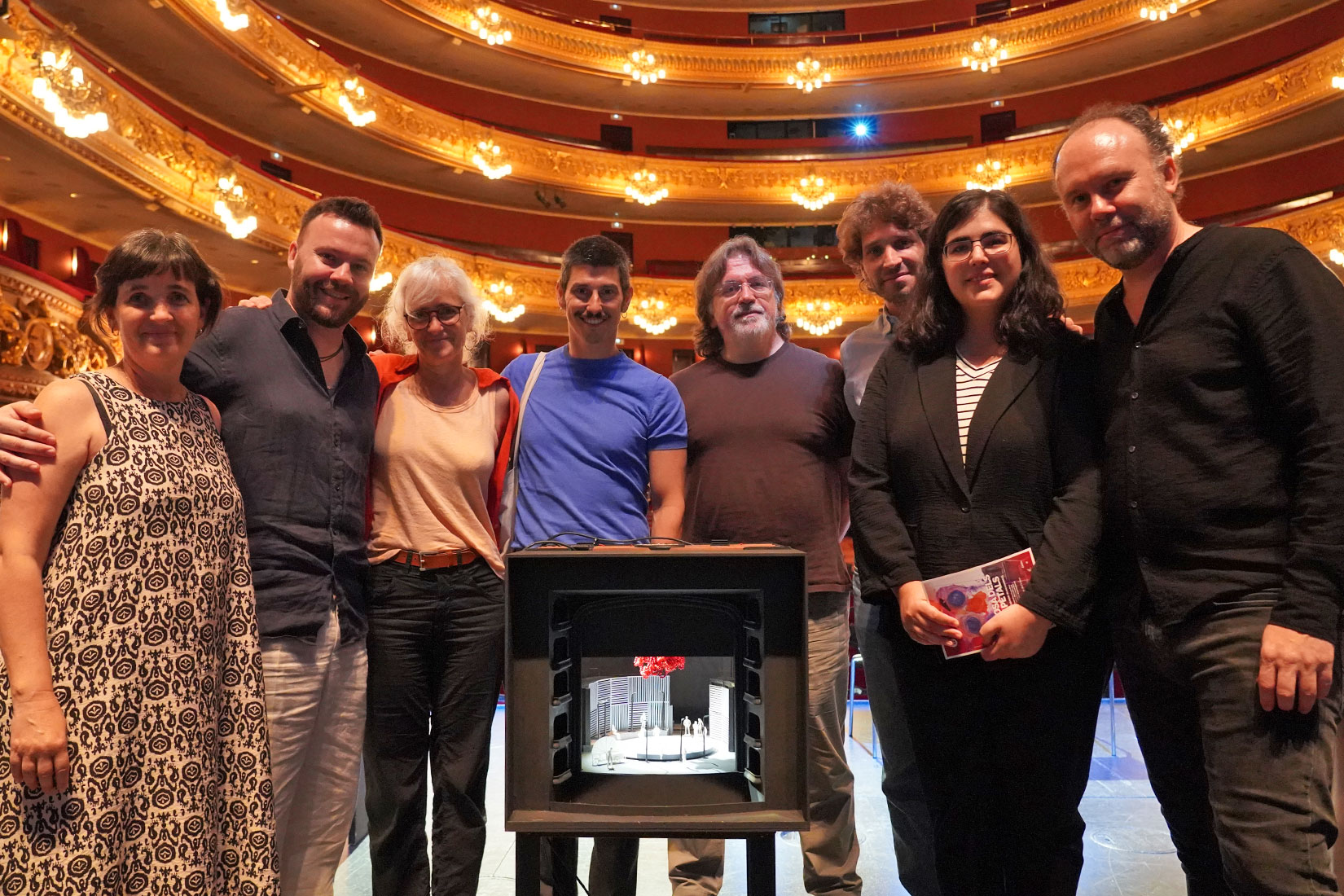
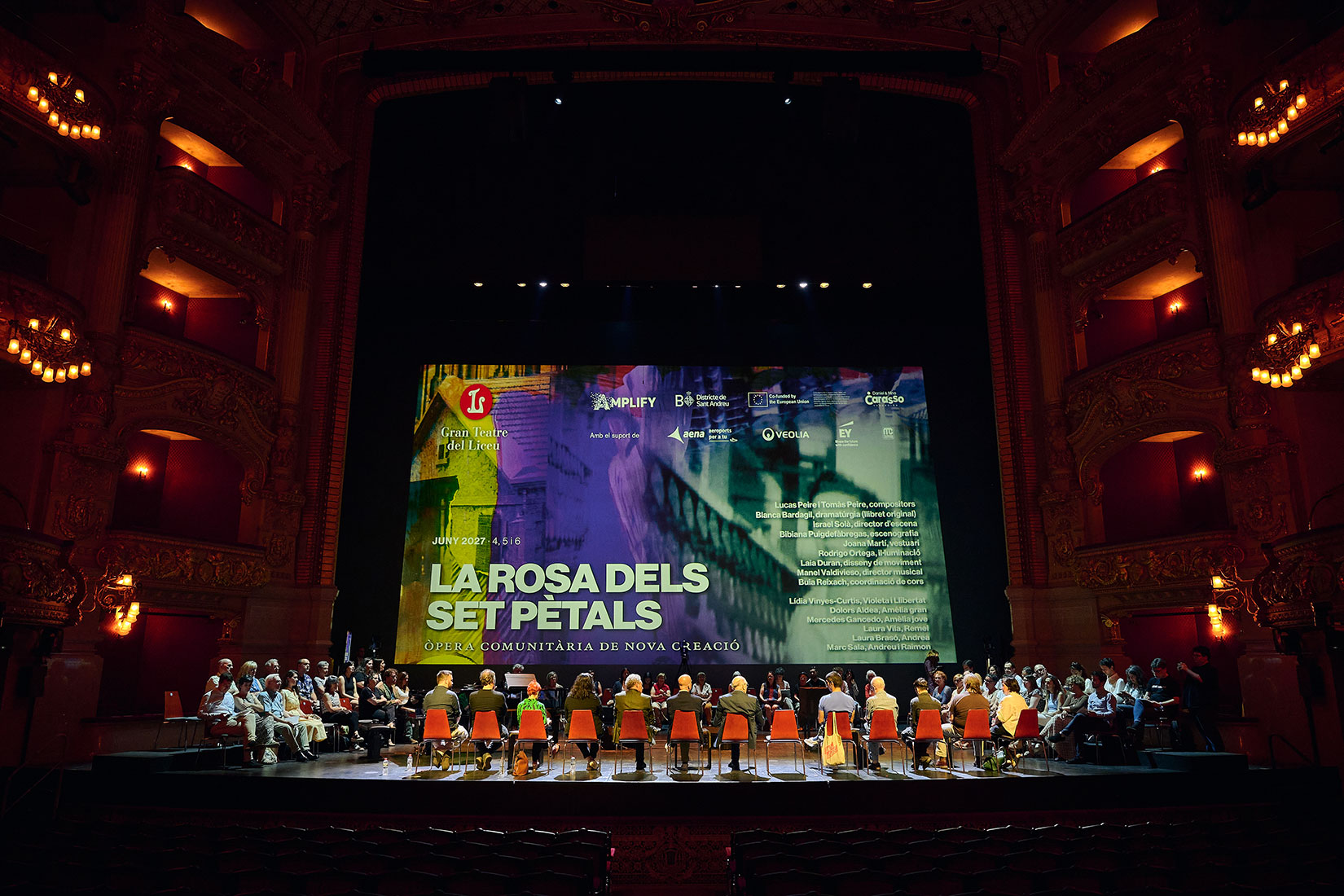
The work features an original libretto by playwright Blanca Bardagil, the result of extensive bibliographic research on the neighbourhood and dozens of interviews with local residents. This documentation process is essential to giving voice to collective memory and transforming it into a source of inspiration for the creation of an operatic fiction deeply rooted in the territory. The musical composition will be created by Tomàs Peire and Lucas Peire, who will develop a score inspired by a libretto with significant emotional depth. Musical direction will be led by Manel Valdivieso, while Buia Reixach is responsible for choir coordination and assisting the musical direction. As for the stage concept, direction will be led by Israel Solà, bringing an open, participatory and community-engaged approach. The creative team is completed by Bibiana Puigdefàbregas (set design), Joana Martí Delgado (costume design), Rodrigo Ortega (lighting design) and Laia Duran (movement design).
Through the direct involvement of local residents in the creative process, the project aims to build an artistic work that goes beyond the stage and becomes a space for encounter, recognition and collective representation of the neighbourhood.
The plot
La rosa dels set pètals explores memory, identity, freedom and resilience. The protagonist, Amèlia, is a woman who, amid delusions and nightmares, relives a traumatic event from her past: she was separated from her daughter Llibertat, born in prison, and lost her forever.
Amèlia, an elderly woman living in a care home, suffers nightmares and delusions related to a traumatic episode from her past. In 1965, while imprisoned in the former women’s prison of La Trinitat Vella, she had a daughter whom she lost under painful circumstances, an event that has haunted her all her life.
Her caregiver tries to calm her and becomes interested in her story. When she shares it with her mother, unexpected connections begin to emerge between Amèlia’s past and their own lives.
As the story unfolds, memories, coincidences and family secrets come to light, linking several characters. With the help of a chorus symbolising collective consciousness and the memory of the neighbourhood, the protagonists embark on a journey of discovery, identity and reconciliation with the past. The narrative explores themes such as loss, memory, family bonds and the search for freedom.
The Sant Andreu district
Sant Andreu represents 9.1% of Barcelona’s population with more than 150,000 inhabitants, and stands out for a higher-than-average population density and a diverse population, with a significant presence of various communities. It has a high proportion of children, young people and elderly residents, as well as a life expectancy above the city average. However, average income and university education levels in the district are below the city average. It also features a strong industrial specialisation that coexists with an active commercial life, making it a key area within Barcelona.
The Sant Andreu District is positioned as a key piece in the shared leadership with the Liceu and as a major facilitator of knowledge transfer from the territory through the Mirror Effect Document, which makes it possible to identify all those entities, agents and collectives in the area that can be linked to the professions and trades of a new opera production, both in the artistic, technical and communication fields.
Based on this knowledge, the Barcelona City Council provides information to activate this mirror effect and identify social and cultural entities, associations, institutions, cooperatives, neighbourhood facilities, music and design schools, choral groups and local residents that may respond to the document. The beneficiaries are individuals or groups who can and wish to take part in the project. No professional background or previous experience in artistic projects is required.
The working methodology is based on the so-called “triangle”: the Liceu vertex (coordinator, supervisor and facilitator), the professional vertex (accompanying artist and guide of the creative and participatory processes) and the community vertex (protagonist of the creative and participatory act).
The Story Chest
The OPERA PRIMA project promotes the creation of a Story Chest with the aim of making the voices of the district’s seven neighbourhoods visible. Although the title of the libretto La rosa dels set pètals refers to the seven neighbourhoods, this chest expands and strengthens the identity of the territory through new narratives, recognising them within the project and involving people who do not directly participate in the operatic production.
The Story Chest is not intended to be a scientific archive, but rather a constellation of creative, singular, authentic and genuine perspectives on the territory. The stories it contains reflect values such as freedom, resilience and identity, and become generators of awareness.
The chest will be available on the website larosadelssetpetals.cat and will be built from videos, texts, stories and images. The artistic company LabOriosa, specialised in community theatre and resident at the Fabra i Coats Creative Factory, translates the collected testimonies into artistic and poetic form. La Veïnal, a community television station in Barcelona based in Sant Andreu de Palomar, is responsible for recording the stories, developed together with LabOriosa and the Liceu, ensuring a close, authentic and artistically sensitive approach. The Museu d’Història de Barcelona provides advisory and support functions in research and material validation, helping to build a narrative that, although based on documentary sources, is primarily grounded in real testimonies linked to the territory.
A project rooted in mediation
OPERA PRIMA is a multidimensional project that goes beyond the creation of an opera with the district’s residents. It also involves a four-year community mediation process, establishing collaborations across artistic creation and culture with local organisations, facilities and residents. In this way, it seeks to create spaces of relationship between the territory and the Liceu, allowing people to get to know the theatre closely and engage in operatic creation through audience attendance, activities, visits, and the LiceuApropa and LiceuAprèn programmes.
One example is the collaboration with the Calidoscopi Cultural programme of the Sant Andreu district, through which facilities in the seven neighbourhoods develop community-based performing arts projects. In the 2025 and 2026 editions, Calidoscopi Cultural and OPERA PRIMA are aligned to facilitate and promote proposals and creative processes linked to opera across different artistic languages.
Work has been carried out with educational centres in the Sant Andreu district over two academic years, with an initial project around La torre dels somnis and a planned continuation with La rosa dels set pètals, still pending definition.
A total of 14 educational centres, 966 students and 101 teachers have participated —IE Rec Comtal, Escola Ferran i Clua, Escola El Sagrer, Escola Turó Blau, Escola Congrés Indians, Escola Baró de Viver, INS Príncep de Viana, INS La Sagrera Sant Andreu, Institut Dr. Puigvert, INS l’Alzina, Escola Sagrada Família, INS Martí Pous, CEE El Nus and CEE Sants Innocents— with collaborative dynamics between schools in the territory supported by LiceuAprèn.
In parallel, the Joves Periodistes de Recomana project has involved several secondary schools in producing journalistic content that feeds the Story Chest. These include Institut El Til·ler (Bon Pastor), Institut Dolors Aleu (Navas), Jesús Maria i Josep Manyanet Sant Andreu school (Sant Andreu de Palomar), Institut l’Alzina (Congrés i els Indians), among others.
A dramatic writing workshop has also been developed with playwright Blanca Bardagil, focused on the poetic translation of the everyday heritage of the neighbourhoods. The aim is to bring the process of theatrical writing closer to citizens and to generate a shared creative space between the artistic team and the community.
Expanded mediation and community communication
OPERA PRIMA incorporates local entities into the project’s communication and outreach, such as the Centre d’Iniciatives Ocupacionals (CIO) de Fabra i Coats, which produces the podcast La Coctelera, with content created, recorded and edited by people from the centre. One of its main objectives is to strengthen the connection with the neighbourhood and the social fabric of Sant Andreu through meaningful and community-driven actions.
The Liceu promotes a process of territorial discovery within the social programme LiceuApropa, involving theatre staff and the artistic team of La rosa dels set pètals in direct engagement with the seven neighbourhoods of the Sant Andreu District through visits and heritage routes (Cases Barates del Bon Pastor, Fabra i Coats, Rec Comtal, Casa Bloc and the Fabra i Coats Space – Museu d’Història de Barcelona), in collaboration with organisations such as the Centre d’Estudis Arxiu Vilabesòs, the Associació d’Amics de Fabra i Coats, the Associació per a la Recerca i Divulgació de la Memòria Històrica de Trinitat Vella and the Museu d’Història de Barcelona, among others.
In parallel, the discovery also works in the opposite direction: since April 2024, 3,095 attendances at the Liceu have been recorded from residents of the Sant Andreu District, both individually and representing organisations and associations, through the theatre’s programming, activities and visits.
Evaluation process
The project’s evaluation process continues to develop, strengthened in this second edition to analyse the scope, impact and overall effects of the project. In the case of the Sant Andreu District, the evaluation will focus particularly on the choral participation of local choirs, with the support of the Daniel & Nina Carasso Foundation.
The process will begin with rehearsals scheduled for September 2026 and will culminate in the premiere in June 2027. The rehearsals will take place at the Institut Martí Pous, within the Fabra i Coats site, which provides spaces for the development of the project.
European AMPLIFY project
The European Commission has validated and co-funded the OPERA PRIMA initiative through the AMPLIFY project, which provides funding for its development. This project is structured as a consortium made up of the following European partners under the leadership of the technology centre Vicomtech, Cooperativa Paulo Lameiro CRL, Toscana Produzione Musica ETS, Fèisean nan Gàidheal, Centrum Wiskunde & Informatica (CWI), Technological University of the Shannon Midlands Midwest, Salsa Sound LTD, Norges Teknisk-Naturvitenskapelige Universitet (NTNU), François Matarasso, Europe Jazz Network, F6S, Last Tour, Stichting Nederlands Instituut voor Beeld en Geluid and the Gran Teatre del Liceu.
With the aim of fostering human connection in the cultural and creative industries sector, technological tools such as the AMPLIFY IMMERSIVE SPACE have been developed, which in the case of the Liceu make it possible to highlight, through a co-creation process, the importance of reclaiming memory and historical heritage, adding a technological layer to the cultural dimension that enhances accessibility and citizen participation. The Liceu’s European project is closely linked to community opera through its libretto. Within this framework, the European project transforms this content into an immersive experience using technology developed by the consortium partners, co-created with the same women political prisoners who inspired the work of Blanca Bardagil, and scripted by the artistic project LabOriosa with the support of the Museu d’Història de Barcelona.
The entire process is developed from a person-centred approach as the core of the creative act. The co-creation process is based on the elements these women consider meaningful: prison spaces, personal objects and the emotions associated with their memories.
OPERA PRIMA
| 
|