

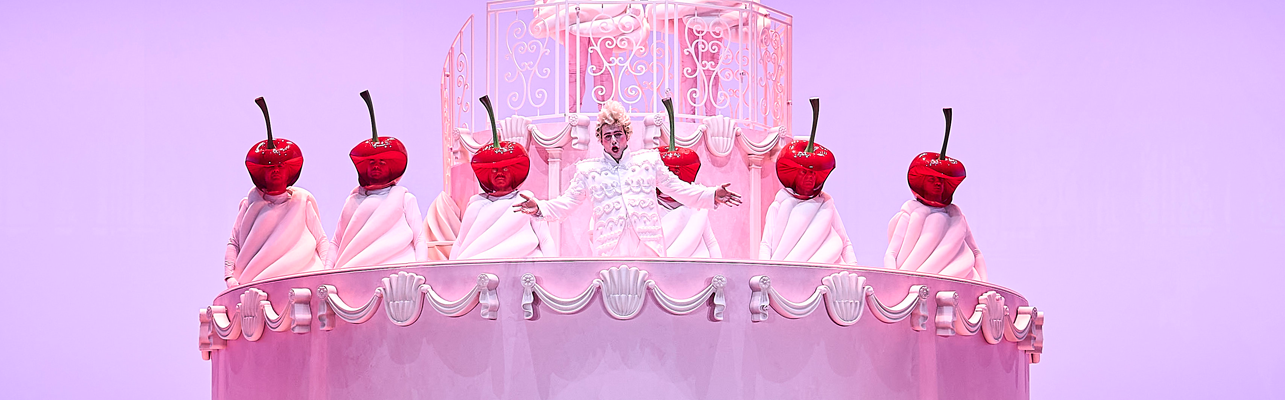
Le nozze di Figaro at the Gran Teatre del Liceu with Marta Pazos and Giovanni Antonini: a new production that combines lyric theatre, social critique, love and power in a symbolic wedding cake set design. A must-see Mozart opera of the season.


When Beaumarchais wrote the comedy Le mariage de Figaro, the Ancien Régime was already fading. However, the message of the work, the intricate web of complications, and the complex psychology of its characters remain as relevant today as they were then. There is something in this play that connects it equally with the audience who attended the Imperial Theatre of Vienna on 1 May 1786 and with the spectators attending the Gran Teatre del Liceu this season. And that something is the enigma of human relationships that Mozart made immortal through his Da Ponte trilogy. Of the three operas, this is the happiest, the lightest, and the most frenetic. It is also, arguably, the best known and most beloved, because the dramatic logic it unfolds seduces and challenges us.
It is true that Le nozze di Figaro brought modernity to the operatic stage both in the themes it addresses and in the way it treats them musically. But, moreover, in this work I find the very essence of contemporary life: the irreverence of history (which temporarily led to its censorship), the boldness of the plot (such as the solidarity between the Countess and her maid, or the Countess’s far superior virtues compared to the Count), and also the dramatic narrative (which pushes the characters to the brink of disaster only for them to be saved in a lieto fine). In this way, the dramaturgical significance of this new staging gives a new creative twist to an iconic work.
The central visual metaphor is the wedding cake, in a powerful set design by Max Glaenzel, lit by Nuno Meira, which symbolises the marriage that structures the story, but also visually represents the social pyramid in which the characters are placed. Each layer of the cake reflects a hierarchy, a role, or a conflict. The festive appearance hides a rigid structure of power that the characters try to climb, break, or maintain. This multi-resonant space symbolises the threshold that, despite everything and everyone, the two Almaviva servants will cross. The cake, turned into a stage object, represents the essence of a life about to be shared: it contains within it the entire future of a couple, a promise of happiness placed at the centre of the stage, both metaphorically and physically. This cake is transformed into the stage itself, as it somehow contains all the characters who inhabit this opera.
The costume design by Agustín Petronio is based on the idea that the characters are like ingredients: each one brings a unique personality —bitter, sweet, soft, intense— and together they compose the scenic recipe of the opera. Love, desire, cunning, and power are treated as flavours that combine, contrast, and create dramatic tension. Ultimately, love is a matter of chemistry; therefore, we propose these ingredients as a way of “cooking” love on stage. Each character is assigned a flavour or visual ingredient that reflects their essence: Barbarina is honey; Cherubino, impulsive and tender, is caramel; Basilio is cognac, according to his dramatic function. These architectural bodies are revealed as a living landscape through collaboration with choreographer Andreas Heise.
With this staging, I aim to construct a universal metanarrative: that of the dramaturgy of life, drawing a dramatic space full of essence, a scene that moves away from the literalness of space (a castle, a garden…) to reach the essence of the wedding itself: to enjoy it, exalt it, and sing it.
In my interaction with Mozart’s work, I set myself two different creative levels: that the stage dramaturgy reveals the network of bonds that unite and separate the protagonists, and at the same time intensifies the emotional charge of the characters, creating for them a sweetened stage space like a wedding cake, sculpted in unconventional colours and forms. This unconventional approach is not simply another way of staging Le nozze, but for me it has become a double imperative, ethical and aesthetic, because in Le nozze di Figaro nothing is predictable and nothing is what it seems: there are many duets, but none of them sings love; the noble character is subject to the most ignoble passions; the game of disguises and lies aims, in fact, to reveal the truth, and all this occurs at every level of meaning.
The work of Maestro Giovanni Antonini in musical direction is unique and highly special; his masterful hand attends to the music and to all the nuances offered by the text in the recitatives.
My main reference for building the idea of this universe and inspiring the artists who have joined this journey with their talent has been Notes on “Camp” by Susan Sontag. In this text, Sontag reveals Camp as a dissolvent of morality and describes it as a way of seeing the world based on a taste for artificiality, exaggeration, and theatricality. Sontag thus reminds us that being natural is the most difficult of performances.
Marta Pazos
Stage director