

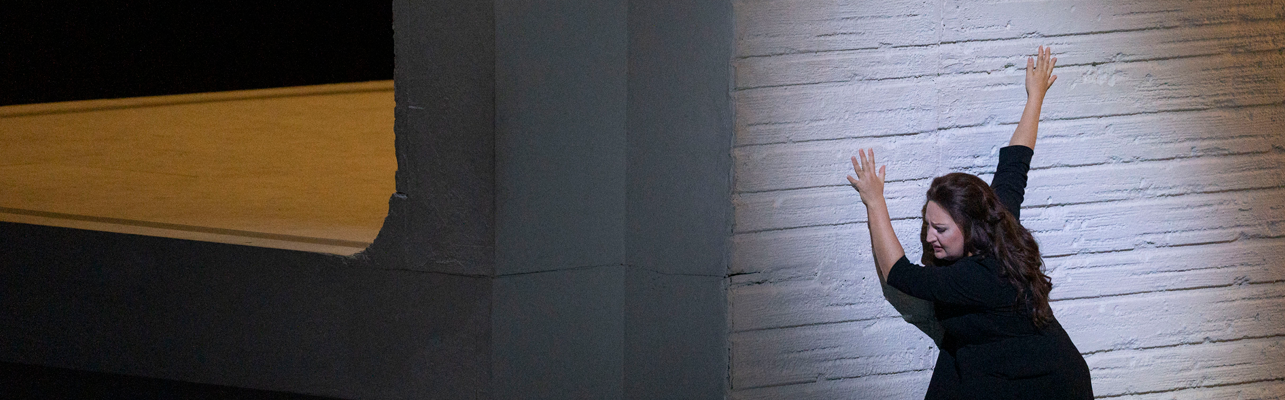
Giuseppe Verdi’s 'Aida' returns to the Gran Teatre del Liceu in a production by Shirin Neshat that offers a contemporary perspective on one of the greatest works in the history of opera. Beyond its monumental spectacle, this masterpiece is a profound reflection on love, power, identity and freedom, featuring one of the most extraordinary scores in the operatic repertoire.


The true story of Aida could be summed up like this: empires fall, but the voices that love endure. It is not about the triumph of armies or the magnificence of temples, but about those who, amid the noise of history, dare to defend the fragility of their deepest desires.
The Gran Teatre del Liceu opens the season with one of Giuseppe Verdi’s greatest musical achievements, brought to life by an exceptional cast. Yet this opening also marks the meeting of two artistic sensibilities separated by more than a century: that of the composer from Busseto, who transformed opera into the moral conscience of his age, and that of Shirin Neshat, an artist who has turned the image into a space of resistance against every form of domination.
Created for the Salzburg Festival, this production strips Aida of the exoticism accumulated through tradition and reveals an Egypt far removed from theatrical spectacle, transformed into a state of mind; the desert becomes an inner landscape, and the temple a metaphor for every system that turns faith into authority and authority into silence. What once seemed distant suddenly feels strikingly close to our own time.
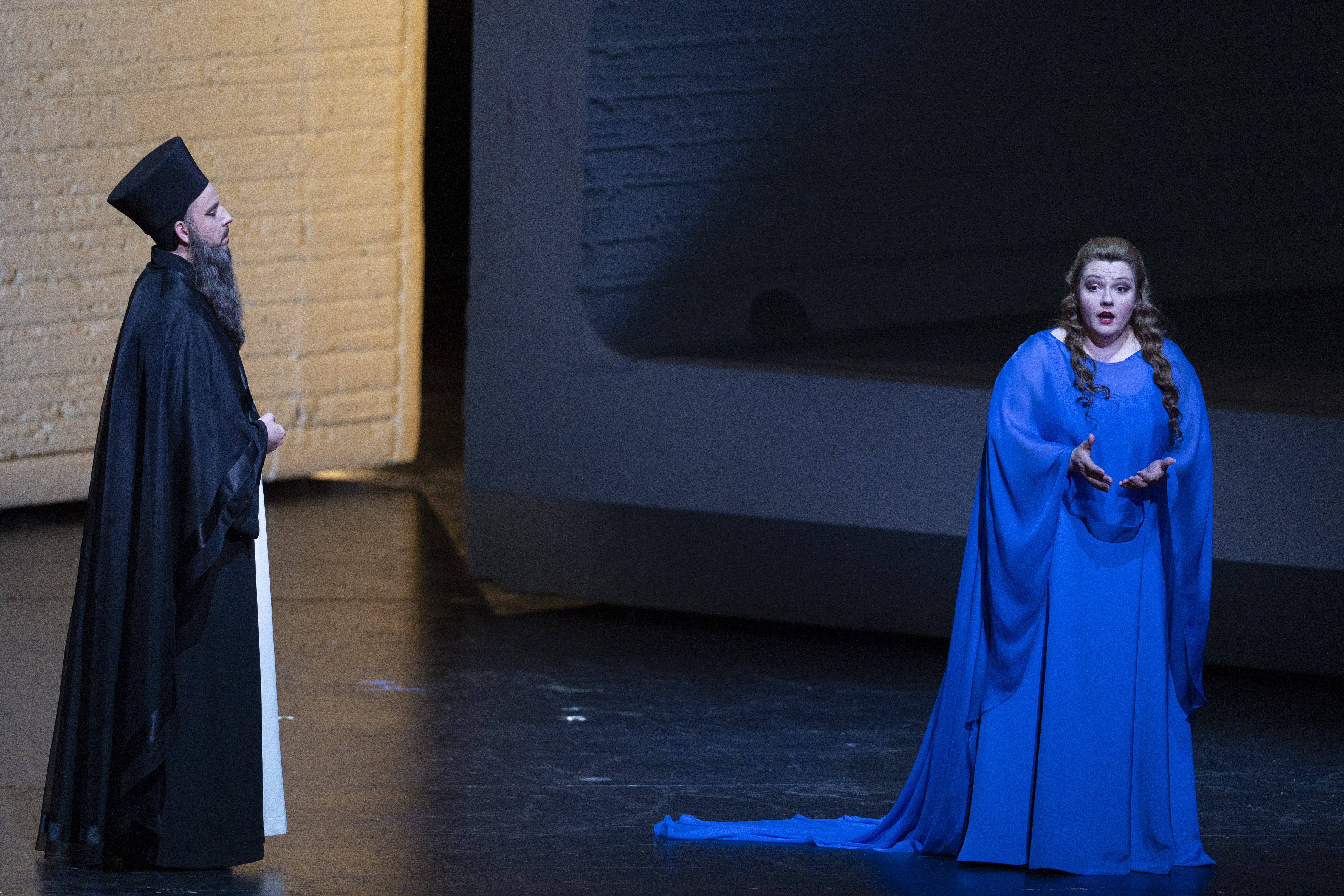
Verdi’s work is, in essence, about a border. Not only the one that separates Egypt from Ethiopia, but the one that divides the individual from the identities imposed upon them. Aida is an outsider even before becoming a slave. Radamès is a prisoner even before being condemned. Together they discover that love is the only territory no state can ever map, and for that very reason it becomes a threat. When power seeks to turn human beings into symbols, love becomes a radical act of freedom.
Verdi shapes this tragedy as an extraordinary hall of mirrors. On the surface lies the splendour of triumphal marches, ceremonies and hymns of victory; beneath it beats the silent pulse of four souls unable to reconcile duty with conscience. Perhaps no other of his operas contrasts public grandeur and private devastation with such force. The louder the people acclaim the victors, the deeper the silence of the defeated. It is within this invisible space that the music finds its most deeply moving truth.
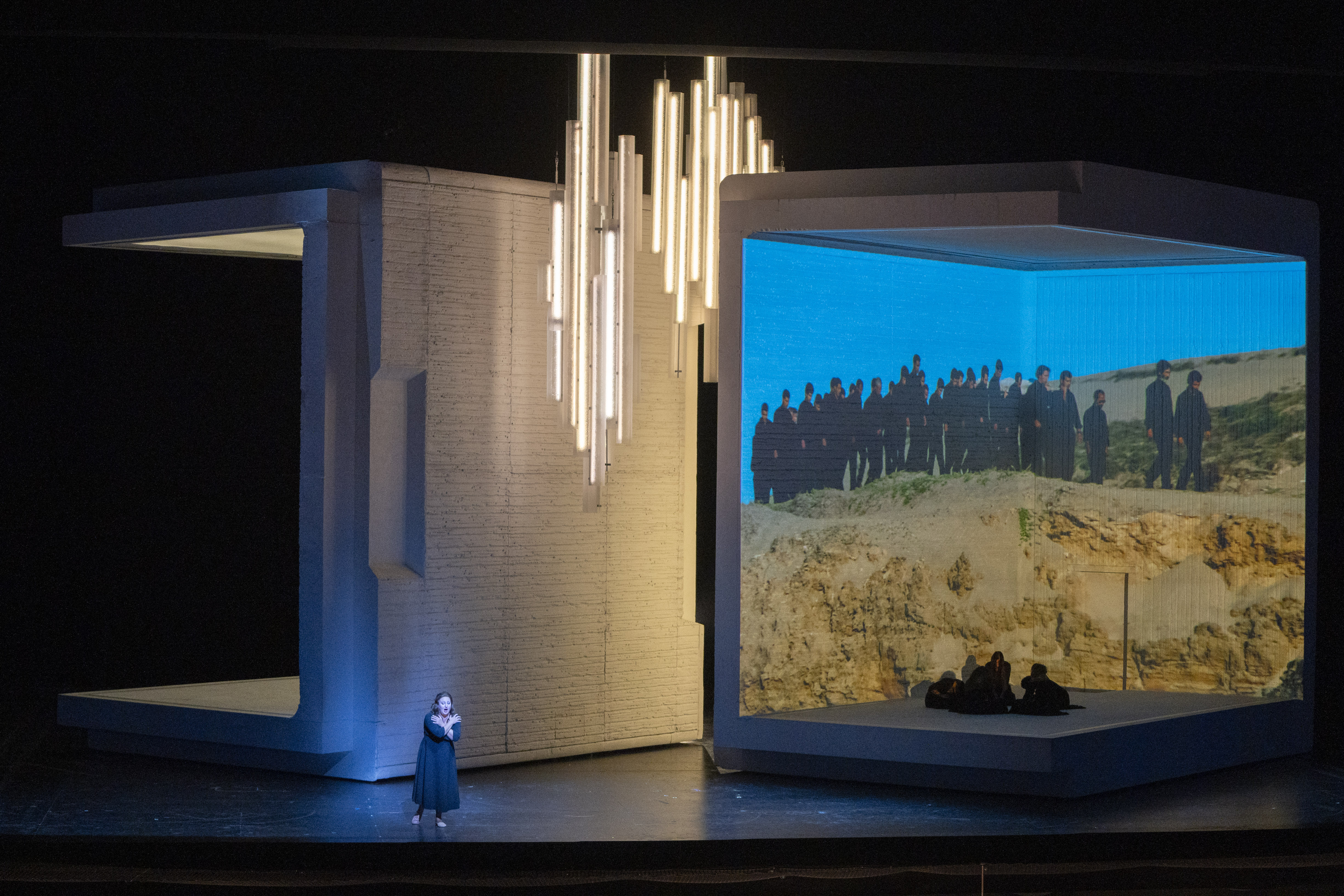
Shirin Neshat’s vision heightens this paradox with a beauty that is never merely decorative. Her images seem to emerge from an ancestral memory: bodies that express what words cannot, shadows that guard remembrance, empty spaces that resonate like inner temples. Her staging does not simply illustrate the music—it breathes with it. Every gesture carries the memory of every exile, and every silence bears the weight of a cry.
When Aida and Radamès are buried alive, they do not merely enter a tomb. They cross the threshold from a world ruled by power into a space where faithfulness to oneself remains the only possible truth. The stone that imprisons them becomes a refuge; the darkness, an unexpected light. Verdi transforms death into transcendence. Neshat, in turn, discovers within it a form of liberation.
Shirin Neshat transforms Aida into a contemporary ritual, reminding us that empires, wars and dogmas belong to time, while love, when it dares to defy them, belongs to the deepest memory of humanity.
Víctor Garcia de Gomar
Artistic Director of the Gran Teatre del Liceu