

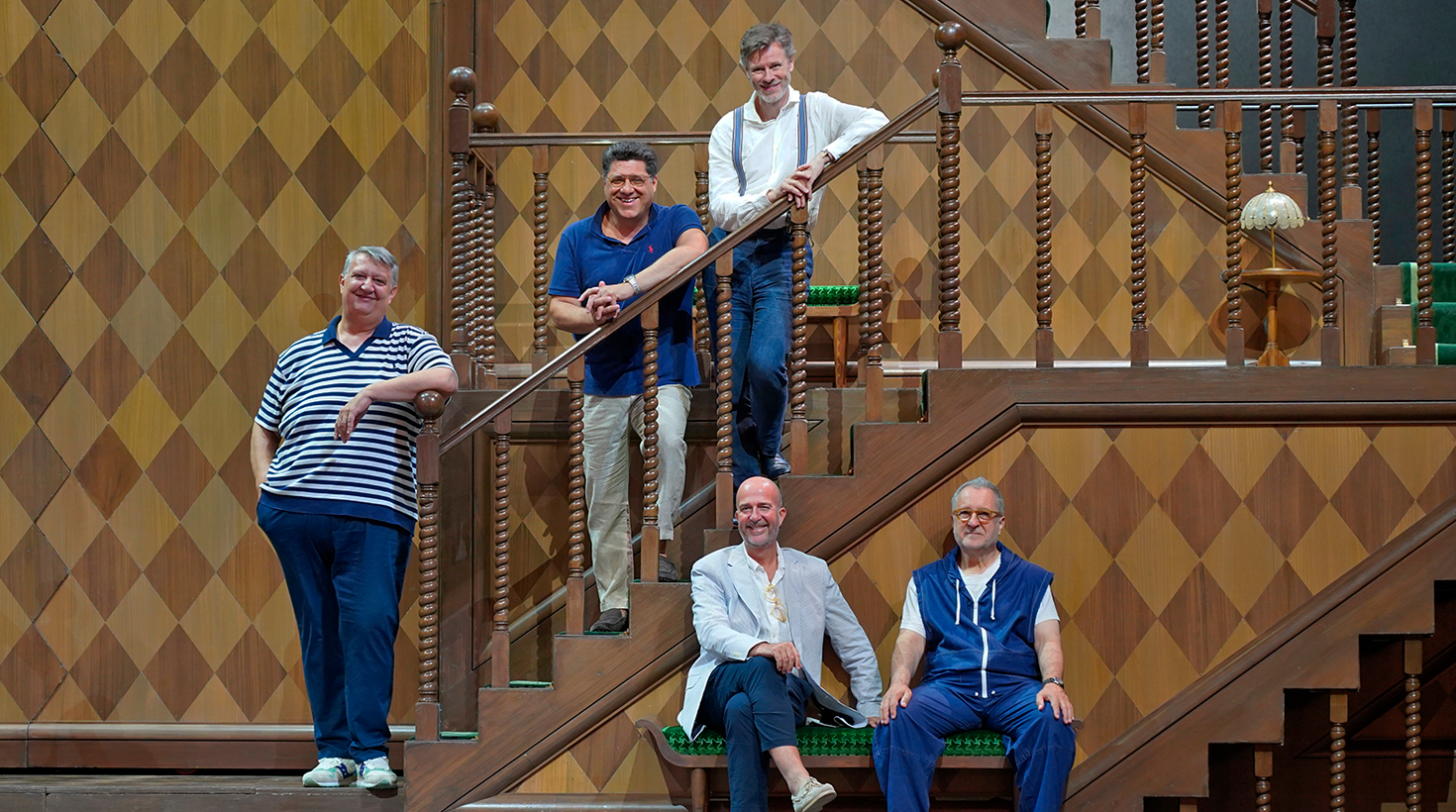
The Gran Teatre del Liceu closes its opera season with Verdi’s 'Falstaff', running from 9 to 19 July. This acclaimed comic opera, presented for the first time in Laurent Pelly’s production, marks the farewell of Josep Pons as the Liceu’s Music Director after 14 years. The eight performances will be led by the renowned baritones Luca Salsi and Ambrogio Maestri.


The Gran Teatre del Liceu closes its 2025/26 opera season with Falstaff by Verdi, from 9 to 19 July, staged by Laurent Pelly and conducted by Josep Pons.
Falstaff is the last of Verdi’s 24 operas, his magnificent farewell after more than 50 years of artistic career. It premiered in Milan in early 1893, when Verdi was about to turn 80. It is a comedy and the second collaboration between Verdi and librettist Arrigo Boito, who based the libretto on The Merry Wives of Windsor and Henry IV by William Shakespeare.
The cast is led by two of the greatest Falstaff interpreters of their generation: Italian baritones Luca Salsi and Ambrogio Maestri. There will be eight performances, from 9 to 19 July, under the musical direction of Josep Pons, who bids farewell this season as the Liceu’s Music Director after 14 years. The production is an original co-production of the Teatro Real in Madrid, in collaboration with Théâtre Royal de La Monnaie in Brussels, the Opéra National de Bordeaux, and the Tokyo Nikikai Opera Foundation.
With Falstaff, Verdi achieved the perfect synthesis of music and theatre. Many of his works attain excellence through the union of text, music, and dramatic power—La traviata, Don Carlos, Aida, and Otello of 1887, the opera that made Falstaff possible, with a libretto by Arrigo Boito. But with his final opera, Verdi allowed himself to break free from convention and indulge in ending his career, after a lifetime devoted to tragedy, with a comedy: a work full of intrigue and good humour.
After the triumph of Otello (1887), Verdi regained an enthusiasm for opera that had seemed to fade. Following the premiere of Aida (1871), the composer had abandoned the genre for more than fifteen years, but decided to return after discovering Arrigo Boito’s exceptional libretto, based on the work of William Shakespeare, whom Verdi regarded as the greatest playwright. The success of Otello strengthened the creative partnership between the two, and Boito persuaded him to undertake a new project, once again inspired by Shakespeare. This time, he chose Falstaff, a character who appears in The Merry Wives of Windsor and in both parts of Henry IV.
The plot
Sir John Falstaff, an ageing knight, impoverished and convinced that he still possesses great powers of seduction, devises a plan to solve his financial problems: to court two wealthy ladies of Windsor, Alice Ford and Meg Page, at the same time. However, the two friends discover that they have received identical love letters and decide to join forces to teach him a lesson.
As Falstaff falls completely into the trap, the jealous Ford begins to suspect his wife's fidelity, setting off a chain of misunderstandings. The deceptions multiply until Falstaff ends up hiding inside a laundry basket and is thrown into the river.
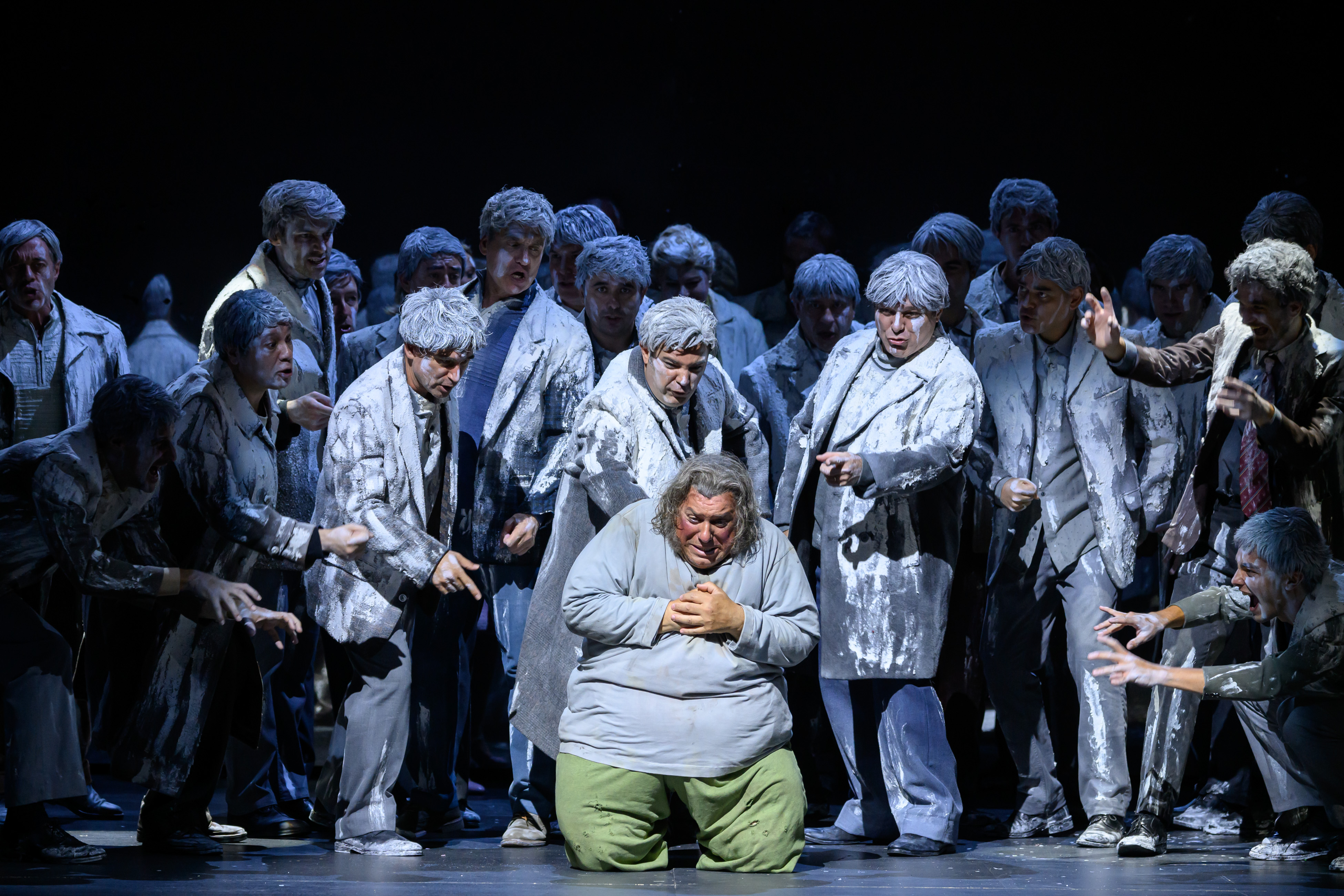
The prank reaches its climax during a night-time meeting in Windsor Forest, where the townspeople, disguised as fairies and spirits, convince Falstaff that he is surrounded by supernatural beings. Meanwhile, the young Nannetta succeeds in marrying her beloved Fenton, despite her father's plans to marry her to Doctor Caius.
When all the deceptions are finally revealed, Falstaff accepts with good humour that he has been the victim of his own illusions. The opera concludes with a memorable choral fugue, in which Verdi crowns his operatic career with a celebration of humour and the human condition: “Tutto nel mondo è burla” (“All the world is a joke”).
Josep Pons’ joyful farewell with a magnificent cast
In these performances at the Liceu, the title role—traditionally reserved for bass-baritones of great experience and commanding stage presence—is performed by two renowned specialists: the Italian singers Luca Salsi and Ambrogio Maestri. Joining them are sopranos Carolina López Moreno and Roberta Mantegna as Mrs Ford, mezzo-sopranos Gemma Coma-Alabert and Laura Vila as Mrs Meg Page, and fellow mezzo-sopranos Daniela Barcellona and Marianna Pizzolato as Mrs Quickly. The fourth female role, Nannetta, written for a lyric soprano, will be sung by Serena Sáenz and Maria Miró. Among the male roles, baritone Lucas Meachem appears as Mr Ford, while tenors Santiago Ballerini and César Cortés perform the role of Fenton. Tenor Josep Fadó sings Doctor Caius, and Falstaff’s servants, Bardolfo and Pistola, are performed by Pablo García-López and Alessio Cacciamani, respectively.
Above all, one member of the artistic team takes on an exceptional level of prominence in these performances. Josep Pons, who has served as the Liceu’s Music Director since 2013, bids farewell to the position with an opera perfectly suited to him: one that is demanding for the orchestra, perfectly balances the musical languages of Romanticism and early Modernism, and carries a special symbolic significance.
Laurent Pelly’s production
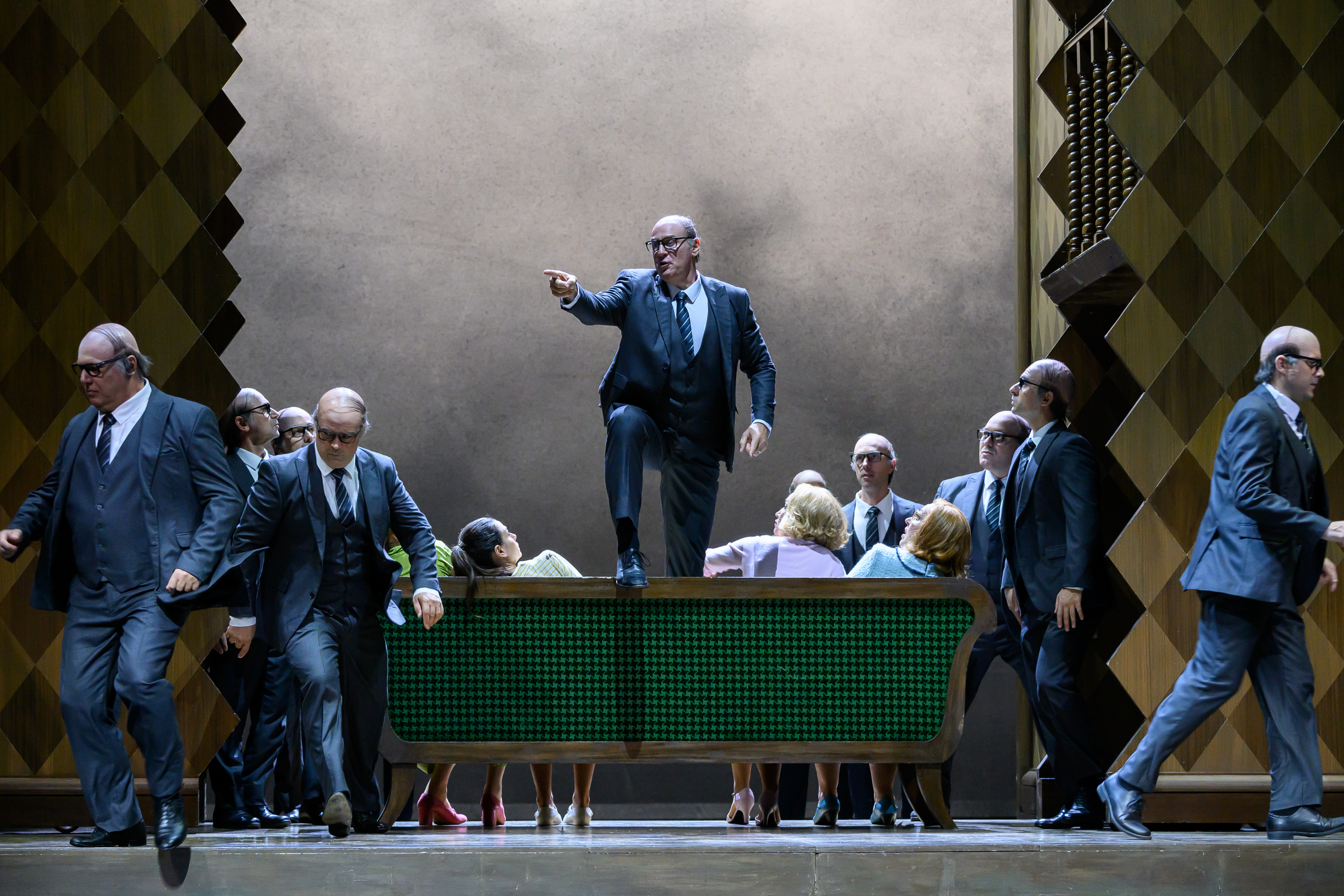
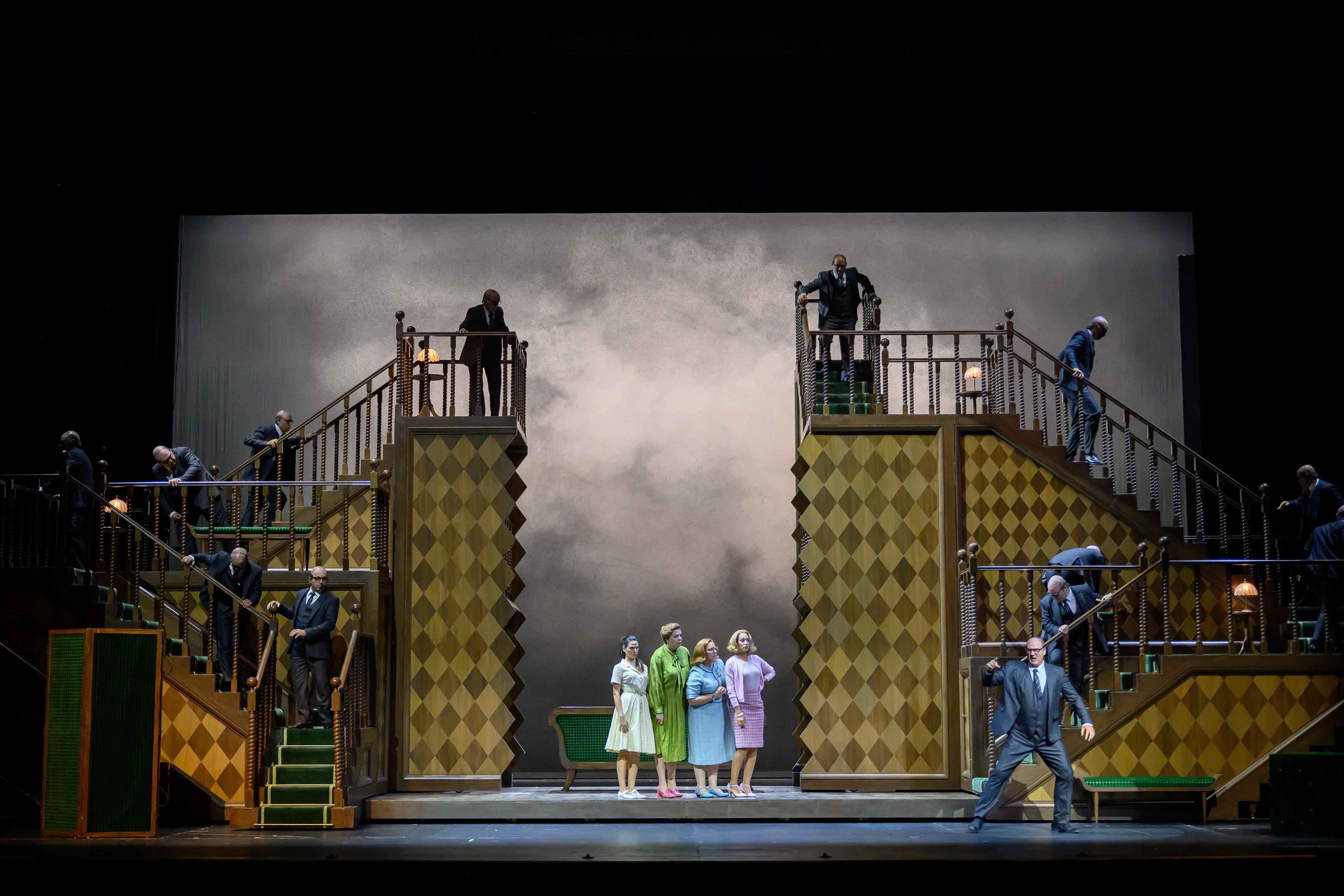
In the upcoming eight performances of Verdi’s Falstaff, the Liceu presents the production by Laurent Pelly, an original production from Madrid’s Teatro Real that remains faithful to Verdi’s aspiration: to achieve the highest expression of theatre. Pelly is a leading specialist in comedy, and in Falstaff he places the characters in realistic settings that heighten every theatrical situation and bring out all the effects the work seeks to achieve: the second-hand embarrassment we feel for Falstaff, the admiration inspired by the wit of the merry wives, the sense of an impossible tangle of misunderstandings, the magical atmosphere of the third-act finale, and more.
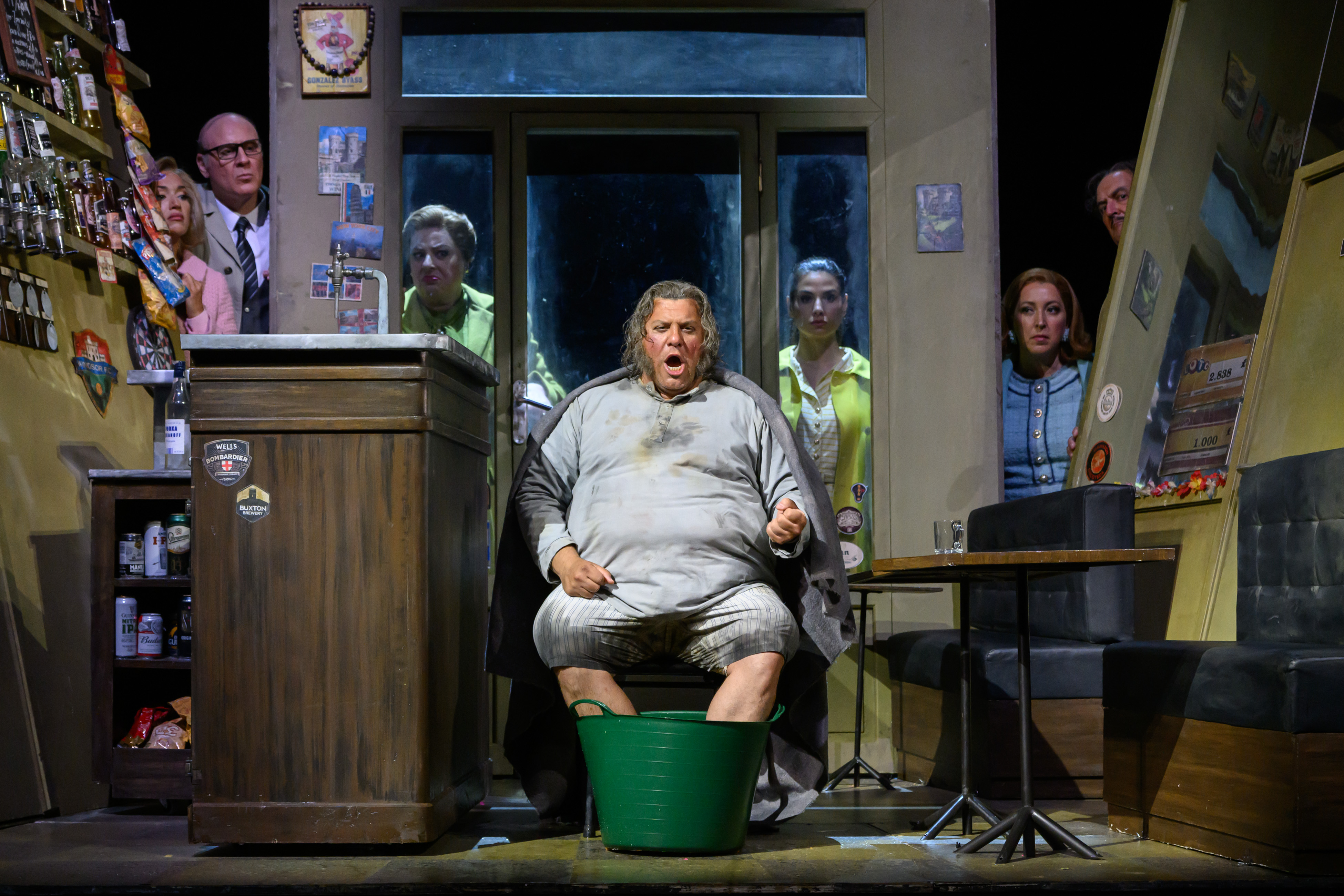
In this production, Falstaff’s tavern becomes an old-fashioned bar and restaurant, baroque in style and overflowing with bottles and mirrors, while the scenes in Windsor unfold within an interior space shaped like a labyrinth or an Escher staircase. The situations become increasingly complicated inside this setting until they are finally resolved outdoors, in the forest of the third act. It is here that Pelly reaches the production’s most visually striking moment, introducing a brilliant conceptual touch: at the end of the opera, when Falstaff utters his famous final words—“All the world is a joke”—the stage reveals a giant mirror reflecting the entire auditorium. Shakespeare wrote that all the world is a stage, and this production embraces that idea: Falstaff brings music and theatre together in a fusion rich in humanity and emotion that extends beyond the stage itself. In doing so, Verdi created a work of remarkable strength that, beyond the popularity of its arias, confirms the maturity and greatness of his final creative period.
Key musical moments
Falstaff is not an opera of great solo arias, but rather of a continuous musical fabric in which individual set pieces are rare, yet deeply significant. At the end of the first act, in the monologue L’onore! Ladri!, Falstaff reproaches his servants for their lack of honour. It is a passage that Arrigo Boito adapted directly from Henry IV by William Shakespeare, expanding on the plot of The Merry Wives of Windsor. It provides a remarkably complete portrait of the character: cynical, yet not evil; boastful, yet possessing a certain nobility. At the same time, it demands a powerful dramatic commitment from the performer, beyond vocal interpretation.
After enduring multiple deceptions and humiliations, Falstaff accepts his fate with good humour and comes to understand the deceptive nature of the world. This moment reaches its climax in the third act with Tutto nel mondo è burla, a choral fugue that Verdi crafts with great mastery, using an ancient musical form to conclude his most innovative opera. The result is an energetic and radiant scene in which all the characters join in the final chorus to celebrate an ironic and optimistic view of the human condition.
With the support of:

|
The Liceu’s Falstaff on OperaVision
This season’s production of Falstaff at the Gran Teatre del Liceu will be streamed on OperaVision on 24 July at 7:00 pm, and will subsequently remain available on the platform for six months.
Supported by the EU Creative Europe programme, OperaVision offers audiences the opportunity to discover the diversity of music theatre, including opera, operetta, musicals, dance, and concerts, with subtitles available to help viewers follow the action regardless of the language. In addition, the platform stands out for its exclusive content and behind-the-scenes videos, as well as its support for emerging artists, providing unique access to the creative process and to the next generation of opera talent.
Co-funded by the European Union

| 
| 
|